
Texas is one of the most attractive states in the country for excavation contractors. New residential developments, commercial construction, utility projects, agricultural work, and land improvement jobs create ongoing opportunities for companies that know how to operate efficiently and manage risk.
If you're wondering how to start an excavating business in Texas, the good news is that the process is straightforward compared to many industries. The challenge isn't starting the business itself. The challenge is building a business that can survive the realities of equipment costs, customer acquisition, insurance requirements, and project management.
I've worked with thousands of contractors through my insurance companies, and I've seen excavation businesses thrive and struggle for one simple reason: preparation. The operators who understand the business side of excavation usually make better decisions than those who focus only on the machines.
This guide will walk through what it actually takes to start an excavation company in Texas.
The Short Answer: How Do You Start an Excavating Business in Texas?
To start an excavating business in Texas, you'll need to establish a business entity, understand local licensing and permitting requirements, secure appropriate insurance, acquire or access equipment, develop a marketing plan, and begin building customer relationships.
Most successful startups begin with a specific service offering, manageable equipment costs, and a realistic plan for finding work before investing heavily in expansion.
Learn more in our blog: 7 Mistakes First-Year Excavation Owners Make
Why Texas Is a Strong Market for Excavation Contractors
Texas offers a diverse range of excavation opportunities.
Depending on your region, excavation companies may work on:
Residential site preparation
Utility trenching
Land clearing
Agricultural projects
Pond construction
Drainage improvements
Road and infrastructure projects
Commercial site development
The work available in Houston may look completely different from the work available in West Texas or East Texas.
That's why one of the first decisions you need to make is identifying the services your local market actually demands.
A contractor serving growing suburban communities may focus heavily on residential excavation, while another contractor may find more opportunities in agricultural earthmoving or utility work.
Choose Your Initial Service Focus
One mistake I see repeatedly is trying to offer every service imaginable immediately.
New businesses often market themselves as experts in:
Excavation
Demolition
Land clearing
Grading
Utilities
Ponds
Road building
Drainage
Site work
The problem is that different services require different equipment, experience, and customer relationships.
Starting with a focused set of services is usually more practical.
For example, you might specialize in:
Residential grading and drainage
Small site-preparation projects
Pond excavation
Land clearing
Utility trenching
Building expertise in one area often creates stronger referrals and a clearer market position.
Learn more in our blog: Is Excavating Worth Starting in 2027? The Honest Case For and Against
Set Up the Business Properly
Every excavation company needs a legal foundation.
Many Texas contractors choose business structures such as:
Limited Liability Companies (LLCs)
Corporations
Sole Proprietorships
The best structure depends on your goals and circumstances, so it's worth speaking with a qualified attorney or accountant.
You'll also need:
A business bank account
Bookkeeping processes
A method for invoicing customers
Tax record systems
Written contracts and estimates
A surprising number of contractors run into problems because they treat bookkeeping as an afterthought.
The companies that grow sustainably usually know exactly where their money is going every month.
Equipment: Start With What You Need, Not What You Want
Equipment purchases often determine whether a startup remains financially flexible.
New owners sometimes assume they need a fleet immediately.
In reality, many successful excavation companies start with:
A compact excavator
A skid steer
A dump trailer
Essential attachments
Reliable transportation equipment
Some contractors buy equipment.
Others lease equipment.
Some rent equipment until project volume justifies ownership.
There's no universal answer.
The right choice depends on utilization rates, cash reserves, financing options, and business goals.
Before making large equipment purchases, spend time reviewing industry resources from the https://www.aem.org. Understanding equipment ownership costs is just as important as understanding purchase prices.
Understand Your Startup Costs
A common question is how much money you need to start an excavating business in Texas.
The answer varies significantly depending on:
Equipment ownership strategy
Business size
Services offered
Marketing needs
Insurance requirements
Geographic location
Potential startup expenses may include:
Equipment purchases or rentals
Trailers
Business registration costs
Fuel expenses
Tools and attachments
Marketing costs
Insurance premiums
Safety equipment
Maintenance reserves
The smartest contractors build contingency funds for repairs and unexpected expenses because excavation equipment eventually requires maintenance.
Explore more in our blog: 7 Mistakes First-Year Excavation Owners Make
Build a Customer Acquisition Plan Before You Need It
Many startup excavation companies spend months thinking about equipment and very little time thinking about customers.
That's backwards.
Equipment creates capacity.
Customers create opportunity.
Before launching, create a simple marketing plan focused on:
Google Business Profile optimization
Referrals from contractors
Local networking
Relationships with builders
Relationships with real estate professionals
Social media visibility
Customer reviews
The goal isn't complicated marketing.
The goal is creating a consistent system for generating conversations with potential customers.
In my experience, excavation businesses that build strong referral networks tend to enjoy more stable growth than those relying on paid advertising alone.
Learn How to Estimate Correctly
Estimating is one of the most important skills in the excavation industry.
Many new operators understand equipment operations better than job costing.
That creates problems.
Every estimate should account for:
Labor
Fuel
Equipment wear
Transportation
Disposal expenses
Overhead costs
Profit objectives
Guessing creates risk.
Accurate estimating creates better business decisions.
One underpriced project can erase the profit from several successful projects.
That's why understanding your actual operating costs is essential before pursuing larger jobs.
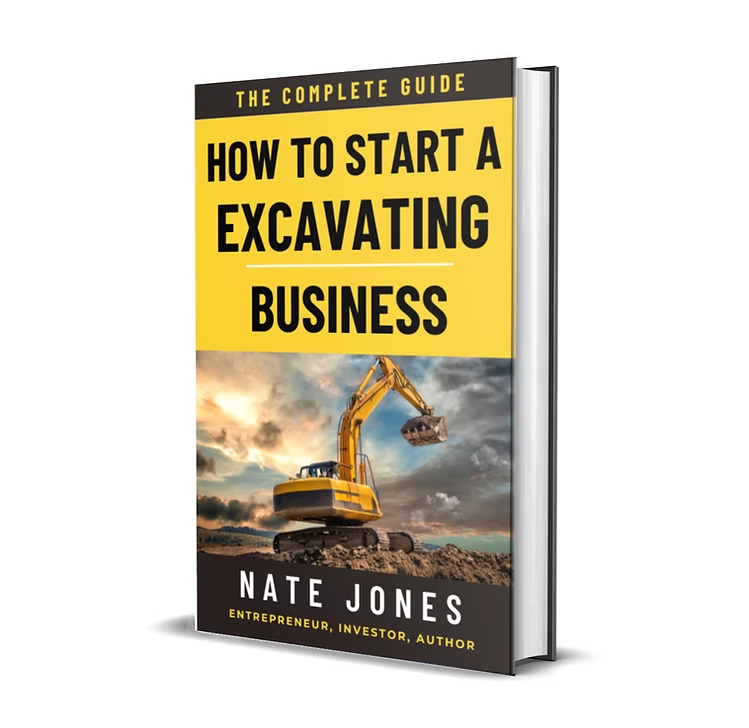
I cover the exact startup planning, equipment evaluation, pricing considerations, and business-building process step-by-step in my e-book, How To Start a Excavating Business
What Most People Get Wrong
Most people think excavation is primarily an equipment business.
It's actually a customer and systems business.
I've seen contractors with older machines build excellent companies because they consistently communicated well, showed up on time, priced work properly, and delivered quality results.
I've also seen contractors with impressive fleets struggle because their operations lacked organization.
Customers don't hire you because your excavator is newer.
They hire you because they trust you to solve a problem professionally.
That's an important distinction.
Insurance and Licensing Reality Check
This is where many startup owners create avoidable problems.
Licensing and permit requirements vary by city, county, project type, and specific scope of work. Texas regulations can differ depending on where and how you operate. Before starting, verify requirements with the appropriate government authorities.
Insurance is equally important.
Excavation work creates exposures involving:
Underground utilities
Property damage
Equipment losses
Vehicle accidents
Jobsite injuries
Third-party liability claims
Never assume personal coverage protects business operations.
Work with a licensed insurance professional familiar with excavation contractors and construction risks.
You can also find business startup resources and guidance through the https://www.sba.gov.
When Should You Hire Employees?
Many Texas excavation businesses begin with an owner-operator model.
That allows new companies to:
Control costs
Learn operations firsthand
Build customer relationships
Refine systems
Understand workload demands
Hiring typically makes sense when work volume becomes consistent enough to justify additional labor and supervision responsibilities.
Growth should support staffing decisions, not the other way around.
FAQ
Do you need a license to start an excavating business in Texas?
Requirements vary depending on location, project type, and scope of work. Verify current requirements with state and local authorities before operating.
How much money do I need to start an excavation company in Texas?
Startup costs vary significantly based on equipment ownership, services offered, operating region, and business scale. There is no universal number that fits every business.
Can I start an excavation business without buying equipment?
Some contractors begin by renting equipment when needed, allowing them to test demand before making major purchases.
Is Texas a good state for excavation contractors?
Texas has diverse construction, development, agricultural, and infrastructure markets that can create opportunities for excavation companies, though competition varies by region.
What insurance does an excavation business typically need?
Coverage depends on the company, equipment, operations, contracts, and risk exposures. A licensed insurance professional can help determine appropriate coverage for your situation.
Final Thoughts
Starting an excavating business in Texas can be a practical path for operators, contractors, and entrepreneurs who understand both the work and the business behind it. The companies that tend to last focus on customer relationships, estimating accuracy, financial discipline, proper insurance, and controlled growth rather than simply acquiring more equipment.
If you're serious about launching an excavation company, my e-book, How To Start a Excavating Business, provides a detailed roadmap for evaluating equipment, planning your startup, understanding costs, finding customers, and building a sustainable operation. It's written for people who want a practical guide without hype, unrealistic promises, or shortcuts. You can learn more
And if you enjoy real-world contractor business advice, subscribe to the Nate Jones Entrepreneur YouTube channel for more practical insights on starting, managing, and growing service businesses.