
If you're thinking about starting an excavating business in Florida, you're probably asking a few important questions. What licenses do I need? How much equipment should I buy? How do I find customers? And perhaps most importantly, is Florida a good place to start an excavation company?
The short answer is yes. Florida offers significant opportunities for excavation contractors thanks to ongoing residential development, commercial construction, utility expansion, drainage projects, and land development work. But opportunity alone doesn't guarantee success. After working with thousands of contractors through my insurance businesses, I've learned that the most successful excavation companies are usually built on business fundamentals, not just equipment ownership.
This guide will walk you through how to start an excavating business in Florida, what mistakes to avoid, and what experienced contractors do differently.
How Do You Start an Excavating Business in Florida?
To start an excavating business in Florida, you'll need to establish a legal business structure, verify licensing and permit requirements, obtain appropriate insurance, acquire access to equipment, create a customer acquisition strategy, and develop systems for estimating and operations.
The most successful excavation startups usually focus on a specific service niche, control expenses carefully, and build strong customer relationships before pursuing aggressive expansion.
Explore more in our blog: How to Start an Excavating Business in Texas
Why Florida Can Be a Strong Excavation Market
Florida continues to experience residential and commercial development across many regions. That development creates demand for excavation-related services.
Depending on your location, excavation contractors may perform work such as:
Site preparation
Land clearing
Utility trenching
Drainage improvements
Pond excavation
Grading work
Foundation excavation
Stormwater management projects
Infrastructure support work
The opportunities available in Miami may differ significantly from those in Tampa, Jacksonville, Orlando, or rural parts of the state.
That's why understanding your local market should happen before investing heavily in equipment.
Many new contractors focus on machines first and customers second. The most successful contractors usually do the opposite.
Define Your Services Before Buying Equipment
A common mistake among startup owners is trying to become everything to everyone.
They advertise:
Excavation
Demolition
Land clearing
Utilities
Grading
Driveways
Pond construction
Site work
Drainage solutions
The problem is that each service category may require different expertise, equipment, permits, and customer relationships.
A better approach is choosing a few services that fit your experience and local market.
For example, Florida contractors often find opportunities in:
Lot clearing for new homes
Residential grading
Drainage corrections
Utility trenching
Small commercial site preparation
By focusing early, you can build expertise and referrals more quickly.
Establish the Business Properly
Running an excavator and running a business are two different skills.
Before taking on projects, establish a solid business foundation.
Many excavation contractors choose structures such as:
Limited Liability Companies (LLCs)
Corporations
Sole Proprietorships
The appropriate choice depends on your circumstances and should be discussed with legal and tax professionals.
You'll also want to establish:
Business banking accounts
Accounting procedures
Written estimate templates
Contracts
Invoice systems
Recordkeeping processes
Contractors who understand their financials generally make better decisions about pricing, hiring, and equipment purchases.
Equipment: Start Lean and Grow Intentionally
One thing I've observed repeatedly is that equipment payments can create pressure on young businesses.
New owners often assume they need multiple machines immediately.
In reality, many successful excavation businesses begin with:
A compact excavator
A skid steer
A dump trailer
Basic attachments
Essential tools and safety equipment
Depending on your situation, renting equipment may also be worth considering until demand becomes more predictable.
The goal is matching equipment expenses to actual work volume rather than future hopes.
Industry resources from the https://www.aem.org can help contractors better understand equipment ownership considerations and industry trends.
Learn the Economics Behind Every Job
Excavation is not simply moving dirt.
It's managing costs.
Every estimate should account for:
Fuel usage
Labor expenses
Equipment wear and maintenance
Transportation costs
Disposal fees
Overhead costs
Administrative expenses
Too many contractors underbid projects because they forget costs that are not visible on the jobsite every day.
Profitable estimating starts with understanding your real operating costs.
Without that understanding, growth can actually create more problems instead of more stability.
Learn more this blog: Buy an Excavation Business or Start From Scratch? The Beginner's Decision
Creating a Plan for Sustainable Growth
Most contractors eventually want to grow.
The question is how.
The best growth strategies are usually gradual rather than dramatic.
Instead of immediately adding equipment and employees, successful contractors often focus on:
Improving estimating accuracy.
Building repeat customer relationships.
Refining operational systems.
Increasing efficiency.
Expanding services carefully.
Growth supported by systems tends to be more sustainable than growth driven by excitement.
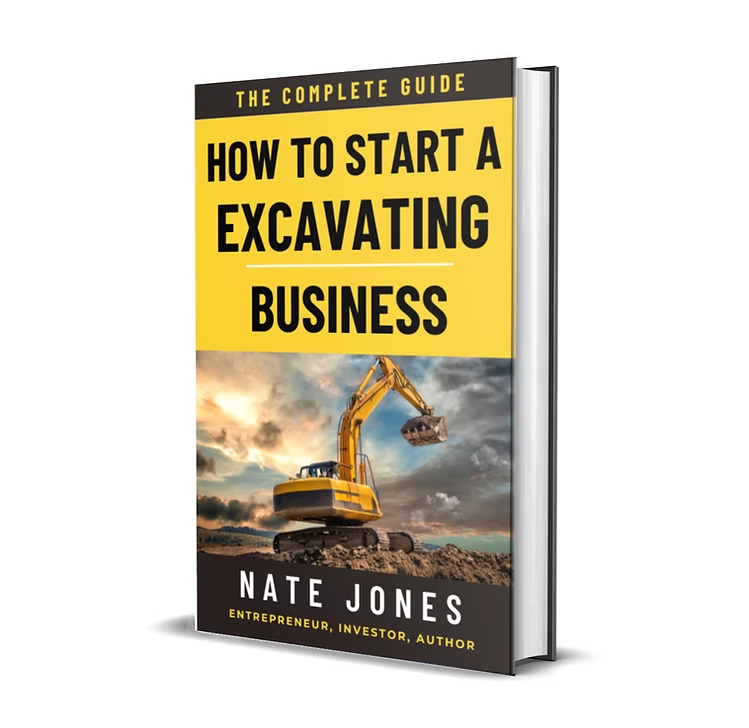
I cover the exact startup planning, equipment selection, customer acquisition strategy, and business-building process step-by-step in my e-book, How To Start a Excavating Business -
What Most People Get Wrong
Most people think excavation companies are built around equipment.
In reality, they're built around trust.
Customers rarely care whether you own the newest excavator in town. They care whether you show up, communicate clearly, solve problems, and finish projects professionally.
I've seen contractors with modest equipment inventories build excellent businesses because they consistently delivered dependable service.
I've also seen contractors with impressive fleets struggle because they ignored the customer experience.
Equipment matters. Trust matters more.
Insurance and Licensing Reality Check
Every state has different requirements, and Florida is no exception.
Licensing requirements may vary depending on the type of work being performed, project value, local regulations, and contractor classifications. Before starting operations, verify all requirements through the appropriate state and local authorities.
Insurance is another area where shortcuts can become expensive.
Excavation companies may face exposures involving:
Underground utility strikes
Equipment losses
Property damage claims
Vehicle accidents
Third-party liability claims
Jobsite incidents
Never assume personal insurance policies provide protection for excavation activities.
Instead, speak with a licensed insurance professional experienced with contractor risks and excavation operations.
The https://www.sba.gov also provides useful resources for entrepreneurs evaluating startup and business-planning decisions.
Florida-Specific Opportunities for Excavation Contractors
Certain types of excavation work are especially common in many Florida markets.
These may include:
New residential developments
Stormwater drainage improvements
Retention pond excavation
Utility installation projects
Site preparation for commercial construction
Lot clearing services
Grading work for new construction
Because weather and water management play important roles in many Florida projects, developing expertise in drainage and site-preparation work can be beneficial in certain markets. Learn more in our blog: Is Excavating Worth Starting in 2027? The Honest Case For and Against
When Should You Hire Employees?
Many excavation companies begin with an owner-operator model.
This allows startup owners to:
Control labor costs
Learn operations firsthand
Build customer relationships directly
Improve internal systems
Understand demand levels before expanding
Hiring often makes sense once workload becomes consistently larger than what one person can realistically manage.
Growth should create staffing decisions, not force them.
FAQ
Do I need a license to start an excavating business in Florida?
Requirements vary depending on project scope, contractor classification, location, and local regulations. Verify current requirements through the appropriate state and local authorities.
How much money does it take to start an excavation business in Florida?
Startup costs vary substantially based on equipment choices, service offerings, insurance needs, and business scale. There is no single budget that applies to every startup.
Can I start an excavation business by renting equipment?
Yes. Some contractors begin by renting equipment while building a customer base and evaluating long-term equipment needs.
Is Florida a good state for excavation contractors?
Florida's ongoing development, construction activity, infrastructure needs, and land-development projects can create opportunities for excavation businesses, although opportunities and competition vary by region.
What insurance does an excavation company need?
Insurance needs vary based on operations, equipment, project types, customer requirements, and business structure. A licensed insurance professional can help evaluate your specific needs.
Final Thoughts
Starting an excavating business in Florida can be a practical opportunity for operators and entrepreneurs willing to focus on business fundamentals alongside technical skills. The contractors who typically build lasting companies pay close attention to estimating, customer relationships, cash flow, risk management, and operational discipline instead of focusing solely on equipment ownership.
If you're serious about launching an excavation company, my e-book, How To Start a Excavating Business, provides a practical roadmap covering startup planning, equipment decisions, estimating, marketing, insurance considerations, customer acquisition, and growth strategies. It's designed for people who want a realistic guide to the industry rather than hype or unrealistic promises. You can learn more
And if you enjoy practical contractor business advice, subscribe to the Nate Jones Entrepreneur YouTube channel for more real-world insights on starting, managing, and growing service businesses.