
If you're thinking about starting an excavating business in North Carolina, you're probably asking a simple question: where do I actually begin? Between equipment, licenses, insurance, permits, and finding customers, it's easy to feel overwhelmed before you even move the first bucket of dirt.
The good news is that starting an excavating business in North Carolina is completely achievable if you approach it methodically. I've worked with thousands of contractors through my insurance businesses, and I've seen firsthand that success usually comes from making sound business decisions early, not from buying the biggest machine on the lot.
This guide will walk through the practical steps involved in launching an excavation company in North Carolina and avoiding some of the mistakes that regularly hold new contractors back.
The Short Answer: How Do You Start an Excavating Business in North Carolina?
To start an excavating business in North Carolina, you'll need to establish a legal business entity, verify state and local licensing requirements, obtain appropriate insurance, secure equipment, build customer acquisition systems, and develop accurate estimating processes.
The most successful startups typically begin with a focused service offering, manageable overhead, and a clear plan for generating work before expanding operations.
Learn more in our blog: How to Start an Excavating Business in Texas
Why North Carolina Can Be a Strong Market for Excavation Contractors
North Carolina continues to offer opportunities for excavation contractors because of ongoing residential development, commercial construction, infrastructure work, agricultural projects, and land improvement needs.
Depending on where you're located, your excavation company may focus on:
Residential site preparation
Drainage correction projects
Pond construction
Land clearing
Utility trenching
Grading work
Commercial site development
Agricultural excavation projects
The needs of a contractor operating near Charlotte may look very different from one serving rural communities or coastal regions.
That's why understanding your local market is one of the first tasks you should complete before spending money on equipment or marketing.
Choose Services Before You Choose Equipment
One of the biggest startup mistakes is purchasing equipment before deciding which services you'll actually sell.
Many people fall in love with machinery and assume work will naturally follow.
In reality, successful contractors usually start by identifying local demand and then selecting equipment that matches those opportunities.
Ask yourself:
Are local builders looking for grading contractors?
Is there demand for land clearing?
Are drainage issues common in your area?
Is utility trenching a viable market?
Do property owners frequently build ponds or private roads?
The answers should influence your equipment strategy.
Buying equipment without a service plan often leads to unnecessary debt and underutilized machines.
Learn more in this blog: 7 Mistakes First-Year Excavation Owners Make
Set Up the Business Correctly From Day One
Starting an excavation company involves more than operating equipment.
You'll need to establish the business itself in a professional manner.
New contractors commonly choose structures such as:
Limited Liability Companies (LLCs)
Corporations
Sole Proprietorships
The best option depends on your circumstances, so professional legal or accounting guidance may be beneficial.
You'll also want to establish:
A dedicated business bank account
Accounting software or bookkeeping systems
Written estimate templates
Customer contracts
Invoice procedures
Job costing systems
Contractors who understand their numbers generally make better growth decisions than those relying on assumptions.
Start Small Instead of Starting Expensive
This section surprises a lot of people.
Many excavation companies that succeed long-term do not start with multiple machines, several employees, and a large equipment yard.
They start lean.
Depending on your market, that may mean beginning with:
A compact excavator
A skid steer
A dump trailer
Basic attachments
Essential safety equipment
Reliable transportation
Some contractors purchase equipment immediately.
Others rent equipment as needed while building a customer base.
Neither approach is automatically right or wrong.
The goal is matching your equipment investment to actual demand.
Industry resources from the https://www.aem.org can help you better understand equipment ownership considerations and operating realities.
Learn How Excavation Estimates Actually Work
Most new excavation contractors underestimate the importance of estimating.
They focus heavily on operating equipment and not enough on understanding costs.
A proper estimate should account for:
Fuel
Equipment wear
Transportation
Labor
Disposal costs
Overhead
Administrative expenses
Desired profit margins
A project can appear profitable on paper while losing money in reality if key expenses were overlooked.
That is why understanding your true operating costs matters so much.
The contractor who consistently estimates accurately often has a major long-term advantage.
Find Customers Before You Need Customers
One lesson I've learned after working with contractors for years is this: the highest-performing companies never stop marketing.
Many new excavation businesses wait until the schedule is empty before trying to generate work.
That's backwards.
Effective customer acquisition activities include:
Creating a Google Business Profile
Networking with builders and contractors
Developing referral relationships
Building a professional website
Collecting customer reviews
Maintaining an active social media presence
Connecting with real estate professionals
Early customer relationships can create opportunities that continue producing referrals for years.
The best time to build those relationships is before you desperately need them. Learn more in our blog: Is Excavating Worth Starting in 2027? The Honest Case For and Against
Creating a Growth Plan Instead of Guessing
Growth should be intentional.
Too many startups assume success means buying more machines and hiring more people immediately.
Not always.
Often the smarter strategy is:
Master a few services.
Build strong customer relationships.
Develop estimating accuracy.
Improve operational systems.
Expand carefully.
Sustainable growth usually happens when systems improve alongside revenue.
Rapid expansion without infrastructure can create operational problems that are difficult to fix later.
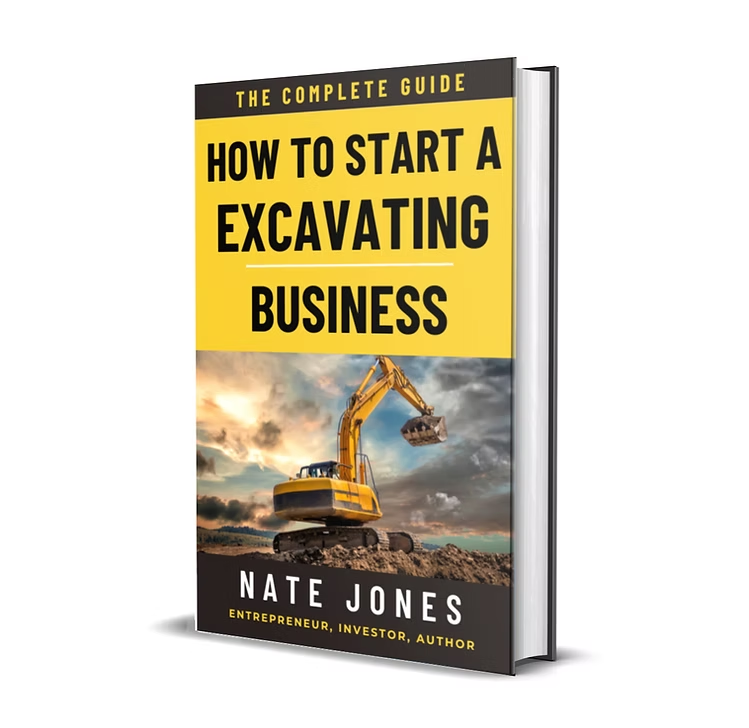
I cover the exact startup planning, equipment decisions, customer acquisition strategy, and growth process step-by-step in my e-book, How To Start a Excavating Business
What Most People Get Wrong
Most newcomers think excavation is primarily about machines.
It's actually about problem-solving.
Property owners don't hire contractors because they own excavators. They hire contractors because they need a drainage problem fixed, a building pad prepared, a pond dug, or a site cleared.
The contractors who focus on solving customer problems often outperform contractors who focus solely on equipment ownership.
That's a subtle distinction, but it's one that frequently separates sustainable businesses from struggling ones.
Insurance and Licensing Reality Check
This is where many startup owners can run into trouble if they make assumptions.
Licensing requirements may vary depending on project size, contract value, location, and the type of work being performed. Requirements can change over time, so always verify current obligations directly with the appropriate North Carolina authorities.
Insurance is equally important.
Excavation operations can create exposures involving:
Underground utility damage
Property damage claims
Equipment losses
Vehicle accidents
Jobsite incidents
Liability claims from third parties
Never assume personal policies provide adequate protection for commercial excavation work.
Instead, speak with a licensed insurance professional familiar with contractor operations and excavation risks.
The https://www.sba.gov also offers business planning resources that may be useful to new contractors.
When Should You Hire Employees?
Many new excavation businesses begin with an owner-operator model.
Doing so offers several advantages:
Lower payroll expenses
More control over quality
Direct customer relationships
Better understanding of workload demands
Simpler operations
Hiring often becomes appropriate when work volume consistently exceeds your available capacity.
But growth should support hiring decisions, not pressure them.
Adding employees too early can create financial strain that many startups aren't prepared to handle.
Common North Carolina Excavation Opportunities
Depending on your location, some common sources of work may include:
Residential construction sites
Rural land clearing projects
Drainage improvement work
Private road construction
Agricultural excavation projects
Subdivision development support
Utility installation projects
Pond excavation services
The best opportunities vary by region, which is why local market research should always come before significant investments.
FAQ
Do I need a contractor license to start an excavating business in North Carolina?
Licensing requirements vary based on project type, value, and scope of work. Verify current requirements directly with the appropriate North Carolina regulatory authorities.
How much money do I need to start an excavation company?
Startup costs vary significantly depending on equipment choices, service offerings, insurance needs, and operating scale. There is no single number that fits every business.
Can I start an excavating business without owning equipment?
Some contractors begin by renting equipment while building a customer base and evaluating long-term equipment needs.
What is the best excavation service for beginners?
The answer depends on local demand, experience, available equipment, and market opportunities. Many new contractors focus on a narrow service area before expanding.
What insurance does an excavation contractor need?
Insurance needs vary by operation, equipment, customer requirements, and project scope. A licensed insurance professional can help evaluate your specific needs.
Final Thoughts
Starting an excavating business in North Carolina requires more than equipment and ambition. It requires planning, financial discipline, accurate estimating, customer acquisition systems, and a clear understanding of operational risks. The companies that succeed long term are often the ones that focus on fundamentals before focusing on growth.
If you're serious about entering the excavation industry, my e-book, How To Start a Excavating Business, provides a practical roadmap for evaluating equipment, understanding startup costs, finding customers, creating systems, and building a sustainable company. It's written specifically for people who want realistic guidance rather than hype or unrealistic promises. You can learn more
And if you enjoy practical contractor business education, subscribe to the Nate Jones Entrepreneur YouTube channel for more real-world insights on starting and growing service businesses.