

If you're starting a dumpster rental business, you're probably focused on trucks, dumpsters, customers, pricing, and permits. Those are important, but one of the fastest ways to create a serious financial problem is overlooking insurance.
I've spent years insuring contractors and service businesses across the country, and I've seen dumpster companies experience vehicle accidents, property damage claims, employee injuries, equipment losses, and legal disputes that they never expected. The good news is that most of these risks aren't mysterious. They can be identified, evaluated, and insured appropriately from the beginning.
If you're wondering what insurance a new dumpster business needs, this guide will walk through the core coverages most owners should discuss with a licensed insurance professional before launching operations.
What Insurance Does a New Dumpster Business Need?
Most new dumpster rental businesses should evaluate commercial auto insurance, general liability insurance, and workers' compensation coverage if they have employees and where required by law.
Depending on the operation, owners may also consider physical damage coverage, commercial property insurance, umbrella liability coverage, and other specialized protections. Insurance needs vary based on equipment, vehicles, employees, service area, and state requirements, so every business should review its situation with a qualified insurance advisor.
Why Dumpster Businesses Face Unique Risks
Many first-time owners assume they're simply renting containers.
From an insurance perspective, there's much more happening.
A typical dumpster company may:
Drive heavy commercial vehicles
Place containers on customer property
Transport debris
Operate around construction sites
Store equipment in yards
Hire drivers
Interact with residential and commercial customers
Each activity creates potential exposure.
The goal of insurance isn't eliminating risk. The goal is helping protect the business when unexpected events occur.
Commercial Auto Insurance
For most dumpster businesses, commercial auto insurance becomes the foundation of the insurance program.
Whether you operate:
A hook-lift truck
A roll-off truck
A dump trailer setup
Multiple commercial vehicles
Commercial auto coverage is usually one of the first considerations.
This coverage is generally designed to address exposures involving business-owned vehicles.
Because vehicle regulations vary based on truck size and operations, it's also wise to understand compliance requirements. That's a natural place to reference Do You Need a Special License to Haul Dumpsters? DOT Basics, since transportation regulations and insurance considerations often overlap.
Many owners focus entirely on buying the truck while spending very little time understanding how that truck impacts insurance costs and operational requirements.
General Liability Insurance
General liability insurance is another coverage many business owners review early in the process.
Dumpster companies regularly interact with customer property.
Potential issues may include:
Property damage allegations
Customer injury claims
Third-party claims
Legal defense expenses in covered situations
No business plans to damage property.
Unfortunately, claims don't require bad intentions.
Something as simple as a misunderstanding regarding dumpster placement can create a dispute.
That's why liability protection deserves serious attention from day one.
Physical Damage Coverage
Many owners spend substantial amounts on trucks and equipment.
Physical damage coverage typically helps address loss or damage to covered vehicles resulting from certain events, subject to policy terms and conditions.
Without it, a major loss involving a truck may become a direct business expense.
When evaluating coverage options, consider:
Vehicle replacement costs
Loan obligations
Equipment value
Business continuity concerns
The newer and more expensive the equipment, the more important this discussion often becomes.
Workers' Compensation Insurance
Once employees enter the picture, workers' compensation becomes an important topic.
Requirements vary by state.
Business owners should verify applicable laws through their state's workers' compensation authority or another official source.
Dumpster rental businesses can expose employees to:
Lifting injuries
Slip-and-fall incidents
Vehicle-related risks
Construction-site hazards
Loading and unloading injuries
Even a relatively small operation should understand its obligations before hiring staff.
The U.S. Department of Labor provides information regarding workers' compensation and workplace requirements.
Commercial Property Insurance
Not every dumpster company owns real estate.
For those that do, commercial property coverage may become relevant.
This can apply to:
Office buildings
Storage facilities
Operations yards
Business personal property
Certain equipment stored at insured locations
Many growing operators eventually accumulate significant assets beyond trucks and dumpsters.
Protecting those assets becomes part of a long-term risk management strategy.
Umbrella Liability Coverage
As a business grows, liability exposure often grows alongside it.
Larger customers, commercial projects, and contractor relationships may increase expectations regarding insurance requirements.
Some businesses evaluate umbrella liability coverage as an additional layer of protection above certain underlying policies.
Whether it makes sense depends on:
Contractual requirements
Business size
Customer expectations
Overall risk profile
A licensed insurance professional can help determine whether this type of coverage is appropriate for a specific operation.
What Most People Get Wrong
The biggest mistake I see isn't buying too little insurance.
It's treating insurance as a one-time purchase.
The reality is that a dumpster business changes quickly.
A company may start with:
One truck
Five dumpsters
No employees
A year later it may have:
Multiple trucks
Additional drivers
More service territory
Larger customers
The insurance program that fit on day one may no longer fit later.
That's why successful operators review their coverage periodically rather than assuming their original setup remains adequate forever.
Insurance Doesn't Replace Good Operations
This is something many new business owners miss.
Insurance is important.
Good operations are even more important.
Strong procedures help reduce claims before they occur.
Examples include:
Driver training
Equipment inspections
Site documentation
Customer communication
Clear service agreements
The fewer preventable incidents you have, the fewer claims you'll likely need to deal with.
Insurance should support operational excellence, not substitute for it.
Property Damage Claims Are More Common Than Most Expect
One risk category deserves special attention.
Dumpster placement.
A customer may later claim:
Cracked concrete
Damaged asphalt
Surface markings
Landscape damage
Whether a claim is valid or not, these situations consume time and attention.
That's why I recommend reading Driveway Protection and Damage Claims: The New Owner's Playbook. It complements your insurance planning by helping reduce one of the more common sources of customer disputes in this industry.
Preventing claims often provides greater value than fighting them later.
Contractor Accounts May Require Proof of Insurance
As your company grows, insurance becomes more than protection.
It becomes a sales tool.
Many contractors, property managers, and commercial customers want to know they're hiring legitimate businesses.
Providing proof of insurance can help establish credibility.
This is especially relevant if you're actively pursuing larger accounts.
For owners focused on growth, Winning Contractor Accounts as a New Dumpster Company is a useful next read because it explains how professionalism and reliability help earn repeat contractor business.
Insurance alone won't win accounts, but lacking it can certainly cost you opportunities.
Growth Creates New Insurance Considerations
Eventually many owners begin thinking about expansion.
A second truck.
Additional dumpsters.
A new employee.
A larger service area.
Each decision changes the business's risk profile.
That's why insurance planning should accompany growth planning.
If you're approaching that stage, From 1 Truck to 2: When a Dumpster Business Adds Capacity is worth reviewing before making large equipment investments.
Growth is exciting, but risk management has to scale alongside it.
Build an Insurance Checklist Before Launch
Before opening your doors, consider discussing the following with a licensed insurance professional:
Business Operations
Service area
Customer types
Equipment owned
Vehicle fleet
Driver responsibilities
Vehicle Coverage
Commercial auto insurance
Physical damage options
Driver eligibility requirements
Liability Protection
General liability insurance
Contract requirements
Property damage concerns
Employee Considerations
Workers' compensation obligations
Hiring plans
Safety procedures
Long-Term Growth
Additional vehicles
Fleet expansion
Commercial contracts
Increased revenues and payroll
A checklist like this creates a more informed conversation rather than simply requesting "business insurance."
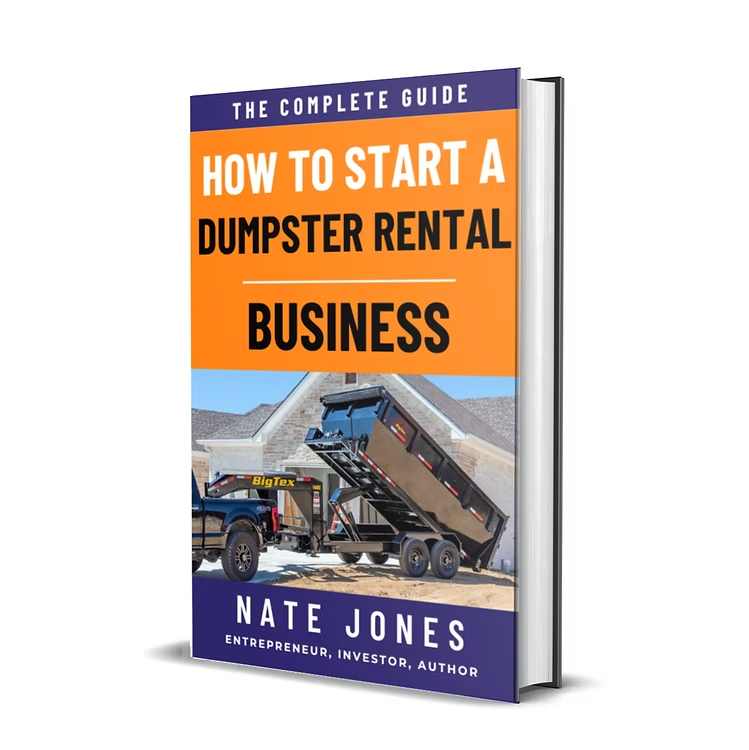
If you're serious about entering the industry, my e-book, How To Start a Dumpster Rental Business.
Licensing and Regulatory Reality Check
Insurance is only one piece of compliance.
Depending on your location, you may also need to evaluate:
Business licensing
Vehicle registration
DOT compliance
Driver requirements
Local permits
Requirements vary significantly by state and municipality.
The U.S. Small Business Administration offers startup guidance.
Always verify current requirements directly with the appropriate authorities.
Frequently Asked Questions
Is insurance legally required for a dumpster rental business?
Certain coverages, such as commercial auto insurance, are generally required for vehicles operated on public roads. Other requirements vary by state and business structure.
What is the most important insurance for a new dumpster company?
Many operators consider commercial auto and general liability insurance among the most important coverages to evaluate early in the business planning process.
Do I need workers' compensation if I have employees?
Requirements vary by state. Business owners should verify applicable laws with the appropriate state authorities.
Will contractor customers ask for proof of insurance?
Some do. Commercial customers and contractors may request proof of insurance before working with a vendor.
Should I update my insurance when adding another truck?
Yes. Fleet changes, growth, new equipment, and employee additions should generally be discussed with your insurance professional to ensure coverage remains appropriate.
Final Thoughts
Insurance isn't the most exciting part of starting a dumpster rental business, but it's one of the most important. A well-designed insurance program can help protect your vehicles, equipment, employees, reputation, and financial stability when unexpected events occur. More importantly, it allows you to focus on serving customers and growing the business instead of worrying about every possible risk.
If you're serious about entering the industry, my e-book, How To Start a Dumpster Rental Business, covers startup planning, equipment selection, pricing strategies, marketing, operations, insurance considerations, compliance topics, customer acquisition, and growth planning. It's designed for entrepreneurs who want a practical roadmap to starting a dumpster business and does not guarantee business results.
For more practical business advice, startup lessons, and real-world insights from the service industry, subscribe to the Nate Jones Entrepreneur YouTube channel.